



OTC Welbee A350P AC/DC
Full technical description
High-Efficiency Aluminium Welding
- Improved welding quality thanks to various functions
- Improved welding of thin sheet metal thanks to the ‘Silent Pulse’ function
- Highly concentrated welding arc improves welding in butt weld and cold arc applications
- Excellent arc-starting characteristics thanks to high frequency or lift start
- Control panel protected against impacts
- Areas of application: Chemical industry, pressure vessels, cars, motorbikes, etc.
- Suitable materials: Aluminium, stainless steel, mild steel, titanium, magnesium, copper, etc.
Includes:
- OTC A350P
- Water-cooling
- Trolley with gas bottle holder
- CS310A/8m TIG torch water-cooled
- Earth cable 70mm² 5 Meter
- 2 Year Warranty
1 – 350 AMP
40% @ 350 AMP
400 Volt
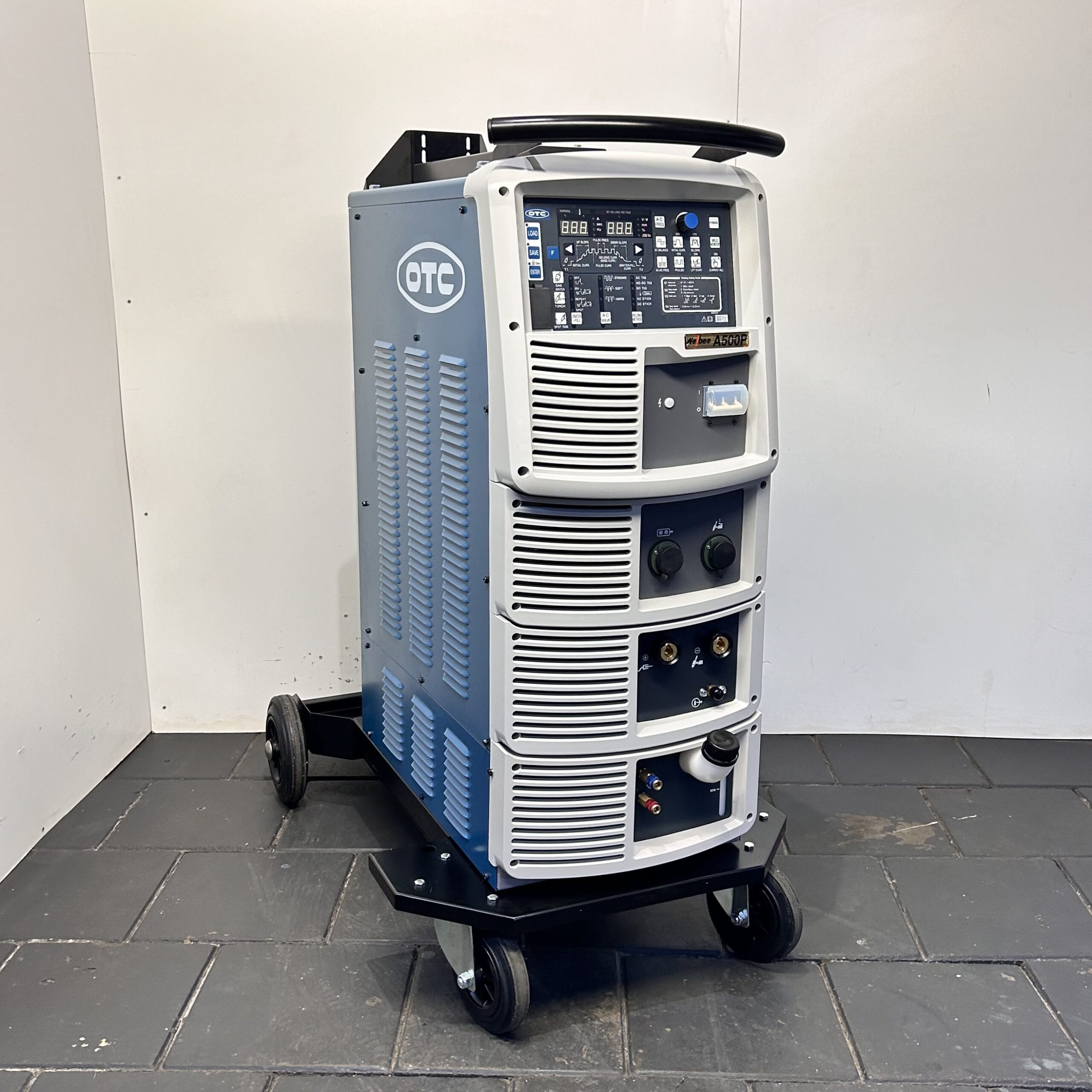
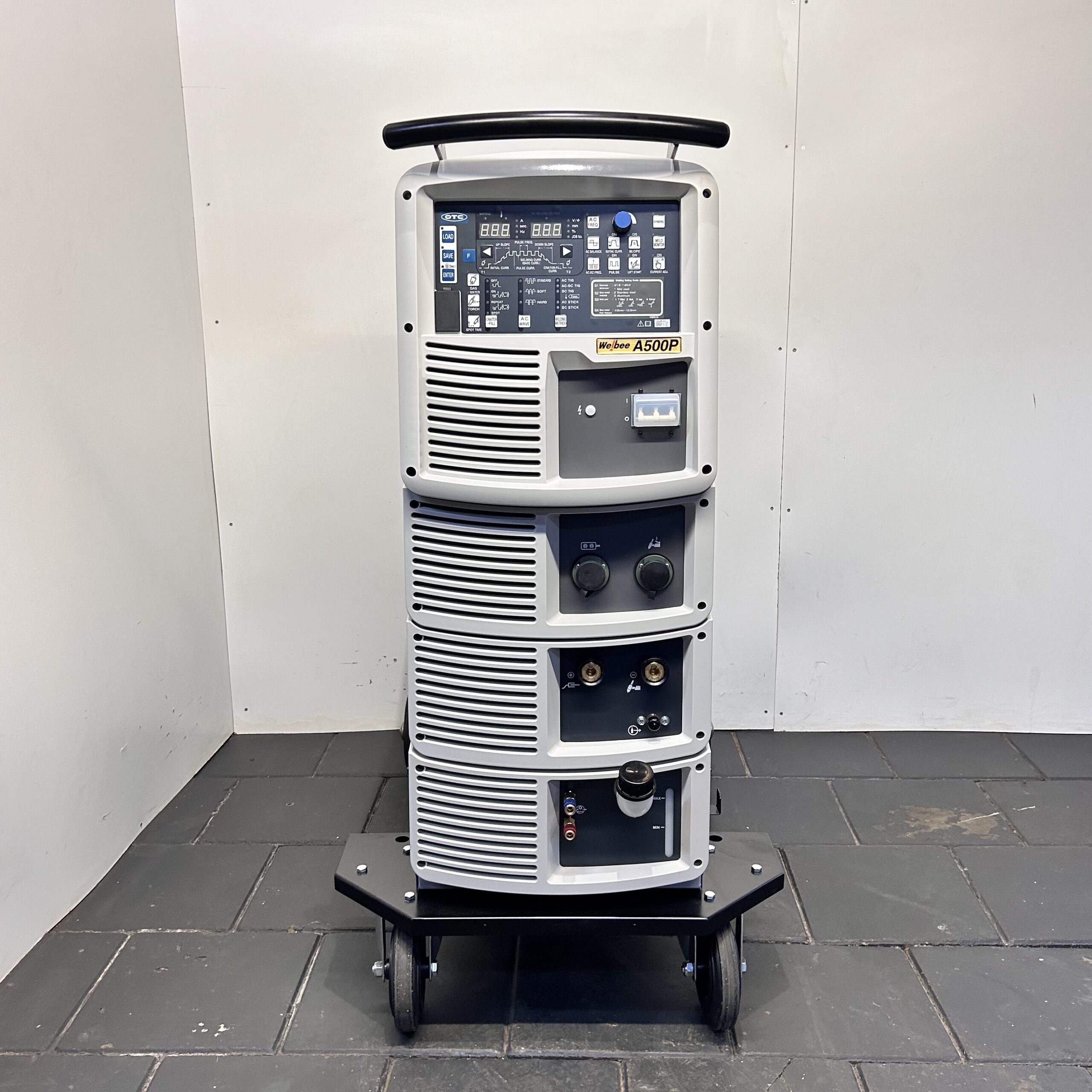
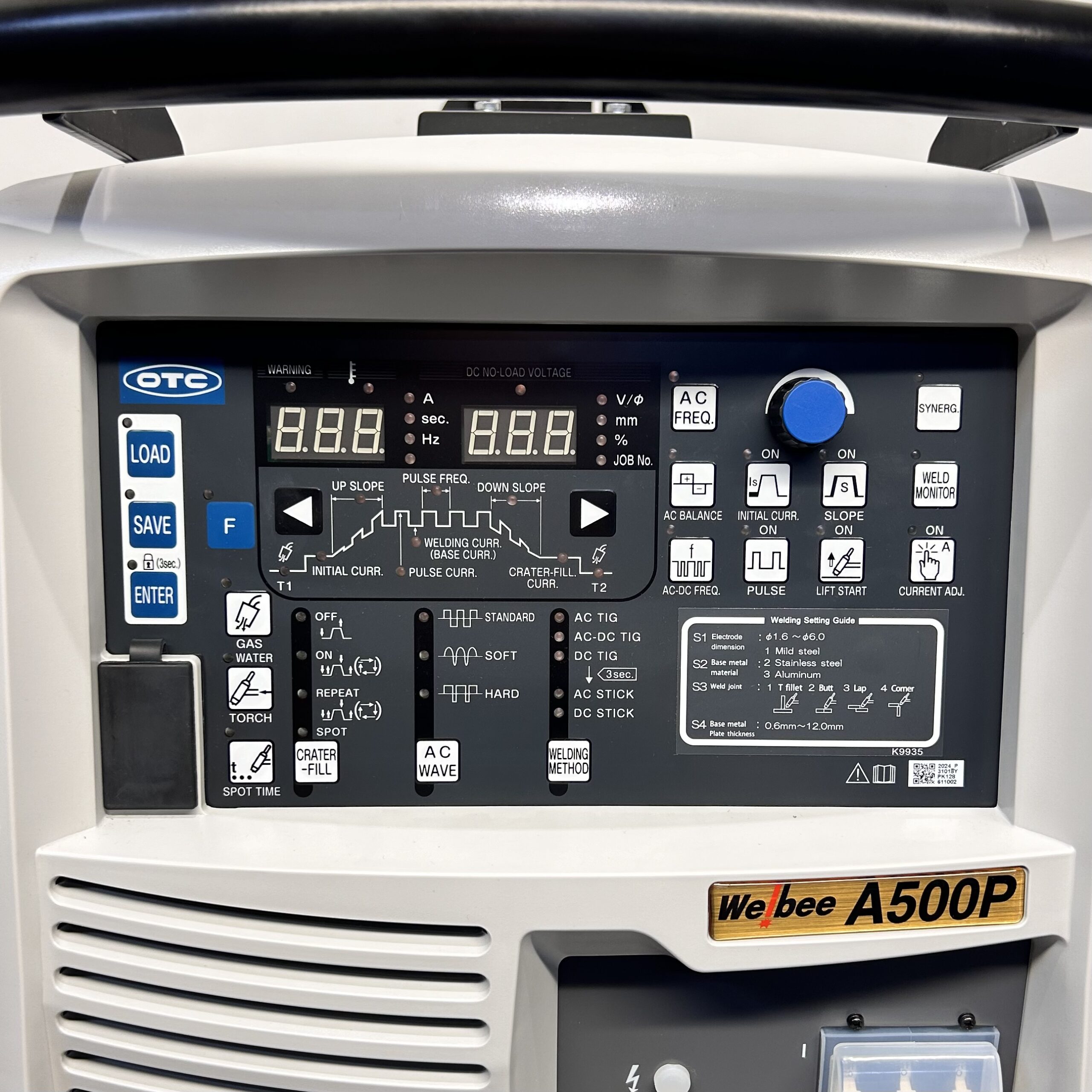
(Images of the A500P are for reference only. The A350P is the same, but smaller.)
AC/DC TIG welding
AC/DC TIG welding combines both AC and DC pulses. The hybrid pulse mode is particularly effective for welding thicker aluminium materials. This method offers several advantages, including deep penetration without preheating, a longer electrode life and precise weld bead formation, particularly when using cold wire.
Standard Waveform
A rectangular pulse shape, in which the peak value is the same for both polarities. Welding can be carried out on a wide range of plate thicknesses. As a stable weld result can be achieved across the entire current range, this is the most commonly used waveform.
Hard Arc
A rectangular waveform in which the peak values of the polarities differ. The concentrated arc produced during DC/TIG welding increases the penetration depth. This makes this mode particularly suitable for fillet welds or the first pass in multi-pass welding. Of the three modes, electrode wear is lowest, but the arc noise is loudest.
Soft – Quiet arc
A sinusoidal waveform in which the peak value is the same for both polarities. This produces a gentle arc that is particularly suitable for thin sheets and butt welds. The arc noise is the quietest and the maximum welding current is 200A. The noise level is drastically reduced thanks to the sinusoidal current, which ensures controlled heat input.